Symbols are easy. Credibility isn’t.
The Board of Peace Logo Isn’t a Design Problem. It’s a Disclosure.
A UN-adjacent seal, a U.S.-centered map, and a gilded posture that says more about power and legitimacy than any press language ever could.
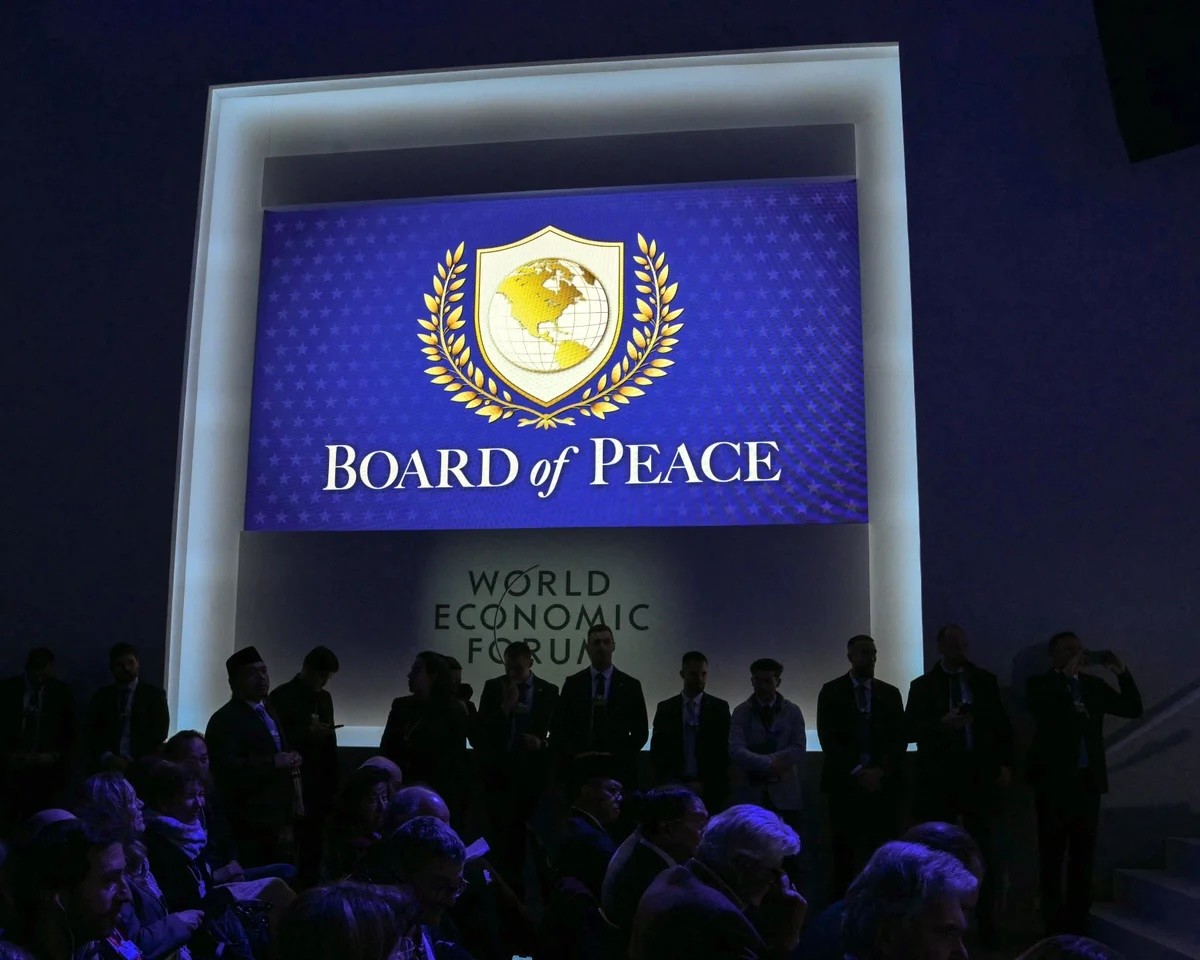
When the messaging is theater, the logo is a peek behind the curtain
In mid-January at Davos, the Trump Board of Peace logo design was unveiled and triggered instant déjà vu: a globe framed by olive branches, rendered in shiny gold, sitting on a shield. If you’ve ever seen the UN emblem, your brain did the match in half a second.
The question isn’t whether it resembles the UN. It’s what that resemblance is trying to purchase.
Why “Board of Peace” does half the storytelling
The Board’s formal purpose has been described as “securing enduring peace, promoting stability, and restoring governance” in areas affected or threatened by conflict. Reuters reports the initiative was pitched as cooperating with the UN, even as diplomats worried it could rival or undercut it.
But you don’t need a charter to understand how the name lands. “Board of Peace” pulls in a whole soft-power expectation set: diplomacy, de-escalation, peace-building, multilateral coordination. Process. Restraint. Legitimacy. Collaboration.
‘Board of Peace’ pulls in expectations before anyone reads a charter.
That’s why the near-UN look is so loaded. Borrowing the UN’s visual language doesn’t read like alignment. It reads like a shortcut to credibility—the association, without the constraints.
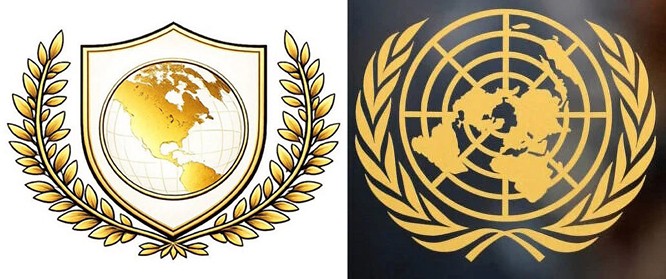
A visual rhyme with very different intent: the UN’s engineered neutrality beside the Board of Peace’s shielded, U.S.-centered seal.
Put bluntly: if the existing table won’t guarantee you a seat—or guarantee you’ll get your way—build a new table and style it to feel familiar.
This is where design stops being “aesthetic” and becomes power-adjacent. Symbols aren’t just decoration. They’re jurisdictional claims.
The UN emblem is a system, not a mood board
The UN emblem isn’t simply “a globe and branches.” It’s a deliberately chosen structure: an azimuthal equidistant projection centered on the North Pole, framed by olive branches—an attempt to depict the world without visibly privileging a single nation. In other words: the emblem is engineered to avoid a single-nation center.
Once you understand the UN emblem as a set of choices, you can’t unsee what happens when someone copies the structure but changes the center. A near-identical arrangement becomes more than “influence.” It becomes a deliberate borrowing of a visual shorthand for global legitimacy.
And when that borrowing happens amid concerns the new body is designed to compete with the UN, the symbol stops behaving like a logo and starts behaving like a flag.
What the Board of Peace seal signals before you read a single word
The mark reads shiny, defensive, and oddly transactional—more seal of authority than diplomatic invitation. (And strangely, I can’t help but laugh at how it’s giving C-tier film festival “Official Selection” energy.)
Start with the finish: gold signals status and ownership more than restraint—kleptocratic chic, excess in place of legitimacy. Multiple outlets noted the gaudy gold palette as “Trumpian,” even if it’s really just co-opting a long-running tradition of gilded, low-taste power signaling.
Then there’s the shield. A shield is an odd choice for a peace mandate—unless the worldview underneath is defensive by default. Then it makes perfect sense: diplomacy framed as protection, not partnership. Not “we’re here to coordinate.” More “we’re here to control the perimeter.”
You don’t need to psychoanalyze to read that. A shield doesn’t prove intent—but it does telegraph posture.
Then you take one step inward: the map.
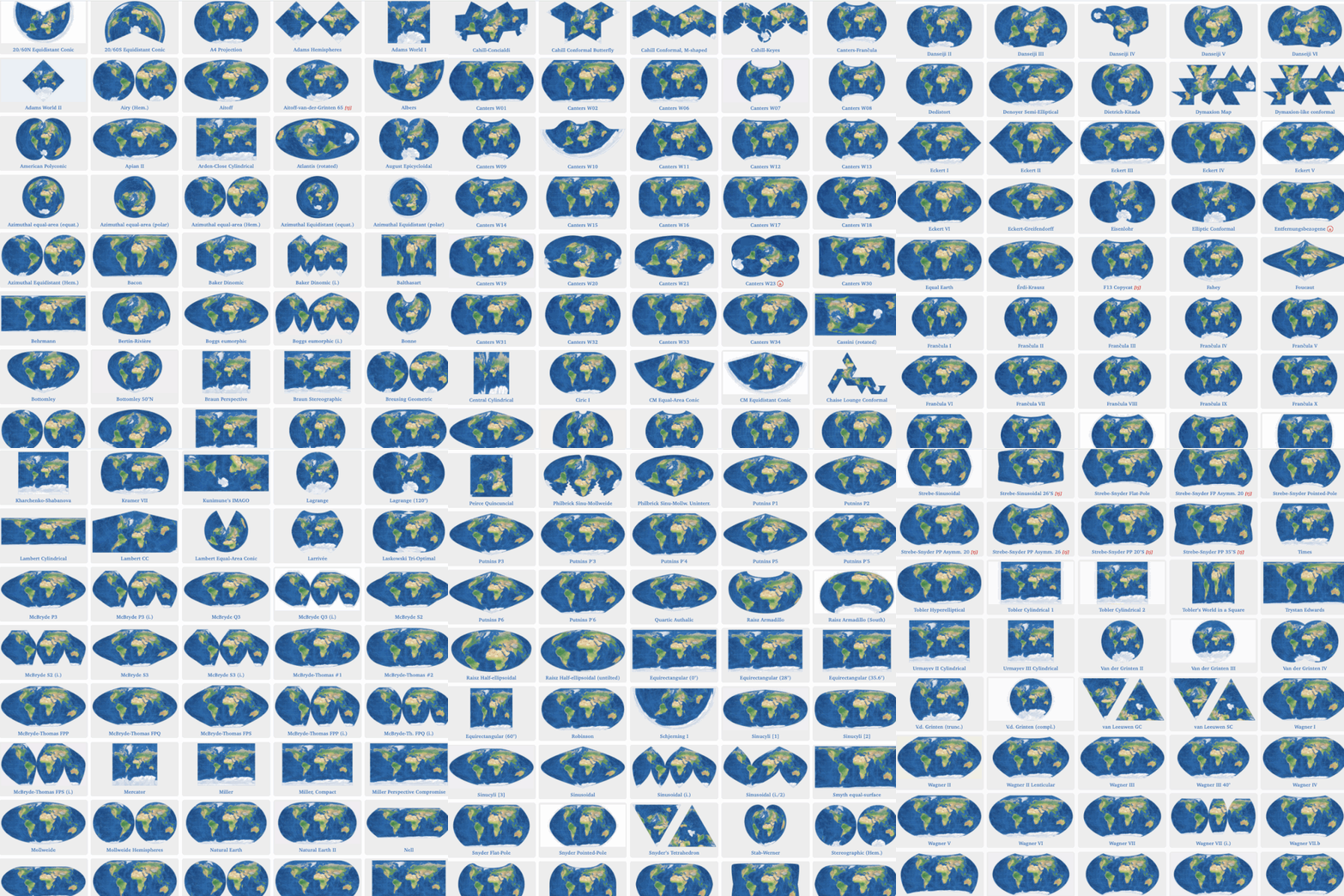
Projection isn’t a neutral container. Change the math, change the story: what gets centered, stretched, or cropped becomes a decision—not a fact.
The map projection tells you who the world is for
The UN emblem depicts the world. This one narrows “the world” down to North America and only part of South America, with the U.S. essentially centered—the detail that’s hardest to dismiss once you’ve seen it.
That’s not a neutral aesthetic choice. In cartography, projection is politics. Every “center” tells you who the story is for. Every crop is a decision about relevance.
In cartography, projection is politics.
And here’s the part worth noticing: despite cropping out most of the planet, the mark still leaves Venezuela readable. On its own, that could be nothing more than geography and scale. But in context, it changes the read: Axios reports Trump posted a doctored Wikipedia screenshot labeling himself the “acting president” of Venezuela. USA Today and others picked up the same incident and the broader swirl it triggered.
So no—this doesn’t “prove” the logo was designed to reference that moment. Call it what it is: a read. But it’s a read the symbol invites. When your “peace” seal is already U.S.-centric, and one conspicuous non-U.S. inclusion rhymes with the news cycle, a cropped hemisphere stops reading like simplification and starts reading like worldview.
To be clear: a map doesn’t prove intent. But maps are one of the most reliable ways intent leaks.
“AI slop” is a symptom, not the punchline
Then there’s the craft.
The wreath has the feel of clip art. The globe texture reads like pseudo-real stock imagery. It feels assembled, not designed. People have been calling it “AI slop,” and whether AI touched it or not, the vibe is the same: output without judgment.
This is where commentary usually gets lazy: dunk on the aesthetics, share the meme, move on. But craft is never just craft at this level. Institutional identity is supposed to communicate care and competence. A rushed identity suggests a rushed mandate—because if you couldn’t be bothered to design the symbol, why should anyone believe you’ll sustain the substance?
Logos are a credible signal when they’re this visibly undercooked.
The $1B detail turns symbolism into structure
Then comes the detail that makes the seal feel less like an aesthetic misstep and more like institutional posture: Reuters reports Trump proposed $1 billion payments for permanent membership.
Put that next to the symbolism and you get a coherent story—whether intended or not:
borrowed legitimacy (UN lookalike)
defensive perimeter (shield)
narrowed worldview (cropped hemisphere)
gilded authority (gold finish)
pay-to-play permanence ($1B seat)
Transactional structure. Transactional symbol. Transactional trust.
In that sense, the logo isn’t just commentary. It’s a preview.
Taste isn’t the point. Fit and care are.
People love to dunk on logos as if every mark needs to show up wearing a Paul Rand suit with a Paula Scher voice and a Milton Glaser wink. But most backlash isn’t actually about purity. It’s about fit and care. Cracker Barrel’s rework was a useful reminder: audiences aren’t grading you on modernism—they’re reading whether the choices feel intentional, and whether anyone bothered to think beyond “ship it.”
That’s why this seal lands differently. It isn’t merely awkward. It’s instructive.
The uncomfortable part: it’s tacky because it’s accurate
The problem isn’t that it’s tacky and derivative, as if those are separate sins we can politely bracket. In this case, tacky and derivative are the point—because they align perfectly with the broader Trump aesthetic and operating style: borrow what signals authority, gild it until it gleams, then insist the shine is the legitimacy.
In a bleak way, it’s an effective mark. Not because it’s well designed, but because it’s consistent. It communicates a worldview through what it gets “wrong” as design: borrowed authority, defensive framing, narrowed globe, gilded dominance, pay-to-play permanence.
It’s the brand promise, compressed—even if the messaging insists it’s something else.
When the messaging is theater, the logo is a peek behind the curtain.

The Weight of Gold
Awards season makes it tempting to confuse the size of the push with the weight of the work. In this essay, Bobby Hougham examines how film and marketing share the same underlying craft—building meaning that survives after distribution, PR, and spend fade. It’s a practical argument for leaders: production is abundant, judgment is scarce, and cultural memory can’t be purchased—only earned.

Tool-Rich, Meaning-Poor: What CES Reveals About Brand Storytelling in 2026